Front-load or top-load? What Rochester buys, and how each holds up
Rochester buys top-load washers about 2 to 1 over front-loads. Here's what each costs, how often each needed repairs in our records, what breaks on each, and how to choose.
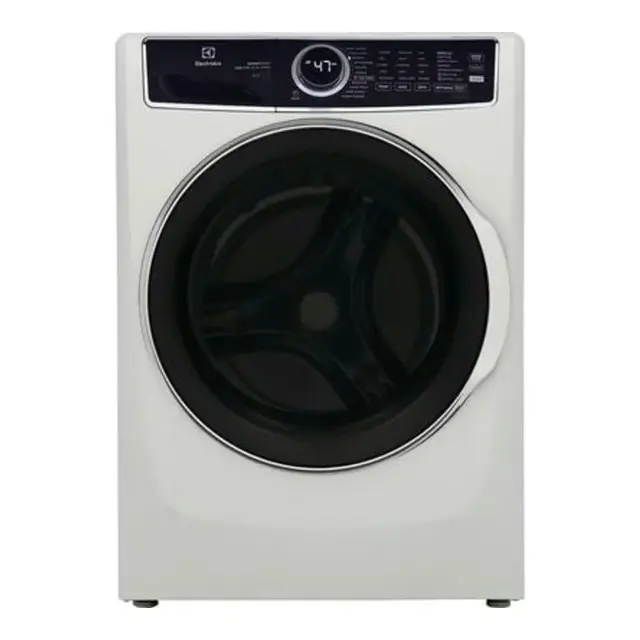
The short version
- Top-loads are about two-thirds of the washers we sell where the style is recorded; front-loads are about one-third.
- For in-box washers, the median top-load sold for $587 in 2026 and the median front-load for $797.
- In their second and third years, front-loads needed 0.79 repairs per 100 washers per year in our records and top-loads 1.4. The statistical ranges overlap, so neither style is clearly more reliable.
- Top-loads mostly fail on lid locks, belts and agitator parts. Front-loads mostly fail on drain pumps and door gaskets.
Front-load or top-load is the first decision in any washer purchase. Here's what our sales and service records say about each, followed by plain advice on choosing.
Side by side
| Feature | Top-load | Front-load |
|---|---|---|
| Share of washers sold | About 2 in 3 | About 1 in 3 |
| Median in-box price paid, 2026 | $587 | $797 |
| Repairs per 100 per year, years 2–3 | 1.4 | 0.79 |
| Most common failures | Lid lock, drive belt, agitator parts | Drain pump, door gasket |
| Water use | More | Less |
| Loading | From above; many let you add clothes mid-cycle | From the front; pedestals raise it, and most can stack |
What Rochester buys
Top-loads outsell front-loads about 2 to 1 at our store, and they cost less: the median in-box top-load sold for $587 in 2026, against $797 for a front-load. Like most appliances, both have gone up: the same washer models cost about 16% more in 2026 than in 2020.
How each holds up
We matched the washers we've sold since 2020 to the repairs our technicians made for a failed part in their second and third years. Front-loads came out lower: 0.79 repairs per 100 washers per year (12 repairs in 1,512 years of use), compared with 1.4 for top-loads (55 in 3,946).
What breaks on each
- Top-load: the lid lock or lid switch is the most common failure. Drive belts and agitator parts follow. We've sold more than 400 agitator dogs alone at our parts counter.
- Front-load: the drain pump and the rubber door gasket are the usual suspects. Both are often caused by something left in a pocket.
- Both: tub bearings and transmissions are the repairs most likely to make a washer not worth fixing.
Front-load care: stopping the smell
- Leave the door open a few inches between loads so the drum and gasket dry out.
- Wipe the folds of the door gasket and pull out anything caught there.
- Run the clean-washer cycle about once a month.
- Use HE detergent, measured. Extra soap leaves residue that feeds odor.
- Clean the drain pump filter a few times a year if your model has one. Follow the owner's manual: unplug the washer, let any hot water cool, and drain the remaining water into a pan before opening it.
How to choose
- Choose a top-load if you want the lowest price, less bending, and (on many models) the option to toss in a sock mid-cycle.
- Choose a front-load if you want to use less water, get clothes out drier (shorter dryer times), or stack a compatible pair in a closet.
- Either way, put new hoses on your washer, and level it when it's installed.
Quick answers
Are front-load or top-load washers more reliable?
Both hold up well. In Rochester Appliance's records, front-loads needed 0.79 repairs per 100 washers per year in their second and third years and top-loads 1.4. The statistical ranges overlap, so neither style is clearly more reliable.
Do front-load washers cost more?
Yes. The median in-box front-load sold at Rochester Appliance in 2026 cost $797, against $587 for a top-load.
How do I keep a front-load washer from smelling?
Leave the door open between loads, wipe the door gasket, run the clean-washer cycle monthly, use measured HE detergent, and clean the drain pump filter a few times a year as the owner's manual describes.
How we got these numbers
From Rochester Appliance's own records: washers sold from April 2020 through October 2026 and the repairs our technicians made, followed through October 14, 2026.
- Rochester Appliance sales records: washers sold from April 28, 2020 through October 31, 2026 whose style (top-load or front-load) is recorded. Prices are the median price paid for in-box washers, before tax and delivery; open-box units and bulk orders are left out.
- Rochester Appliance service records through October 14, 2026: repairs for a failed part, counted per 100 washers per year of use in their second and third years, with 95% likely ranges of 1.0–1.8 (top-load) and 0.41–1.4 (front-load).